EcoSafi gives stoves away. This is actually a brilliant business model.
EcoSafi has created a clean cooking model that works backwards. But it does work.Imagine bringing your charcoal barbecue indoors to cook your meals. This is a reality for millions of families in Kenya who still cook over charcoal. It’s far from ideal as it costs them a lot of money, fills their homes with smoke, and decimates forests. EcoSafi's clean cookstoves remove the need for charcoal, replacing it with sustainable and affordable pellets. But that’s not the clever part of the business model; that starts somewhere counterintuitive: they give the stoves away.
Removing the barriers to cleaner cooking
Families in Kenya receive EcoSafi's high-efficiency stove free of charge, and it stays guaranteed, so they will repair or replace it at no cost. EcoSafi absorbs the upfront cost and recovers it over time, removing the one barrier that has inhibited clean cooking uptake for decades: the price of the stove.
The EcoSafi BetterStove is among the very few that meet the World Health Organisation's definition of clean.
The business is in the fuel
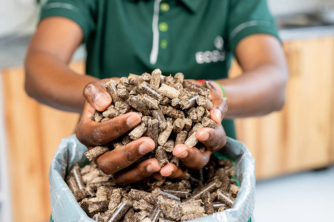
EcoSafi pellets are made in Kenya from waste biomass, mostly sugarcane residues that would otherwise rot or be burned (emitting carbon). When turned into cookstove pellets, they cost families 40 to 70% less than charcoal or LPG, and they burn hotter and faster.Across the households funded by the latest bond offer of Energise Africa, that adds up to an estimated £310,716 saved over five years, and 61 hours given back to each household every year from time not spent tending a charcoal fire.
So the repeat purchase of the pellets creates the revenue for EcoSafi, customer acquisition through free stoves means more people can benefit.
Every meal is a verified carbon reduction
EcoSafi issued Africa's first Gold Standard metered clean-cooking carbon credits, and holds top-tier independent ratings for their quality and integrity. In 2025, it earned Africa's first "AA" standalone carbon rating.
The stoves funded by this bond are expected to avoid 37,673 tonnes of CO2 over their lifetime, and a chip inside each stove records exact usage data. Those verified savings are what makes the model circular: waste becomes fuel, fuel replaces charcoal, replaced charcoal becomes carbon revenue, and carbon revenue keeps the stoves free.
Pellet distribution creates local work, much of it for women
Getting the stove’s fuel to thousands of households needs people on the ground. EcoSafi's distribution network is made up of local agents and delivery routes, creating paid, steady work in the communities it serves, with a significant share of those roles held by women. It's one of the most interesting parts of the business model and in this clip, Jordyan and Brenda from EcoSafi explain how it works.
So, where do repayments come from?
Bond repayments will be made from an MCFA grant, allowing EcoSafi to focus on delivering long-term social, environmental and climate outcomes and giving them time to generate carbon credits at scale.
You can be part of it
We don't say this lightly: EcoSafi is one of the most impactful opportunities we have brought to Energise Africa. We have been to Kenya and seen it for ourselves: the factory, the pellets, the stoves and we came away highly impressed by the business and by the difference it is making. Investing in this bond helps put thousands more clean cookstoves into Kenyan homes. It cuts household fuel bills, clears the smoke out of kitchens, creates paid local work, and leaves trees standing. Social, economic and environmental impact, all from changing the way a family cooks dinner.