The Paris Agreement in Kenyan kitchens: how a global climate deal is changing lives in Nairobi
You could be forgiven for feeling cynical about COP.
Every year, world leaders and climate negotiators gather in a global city and emerge with plans, commitments and carefully worded agreements that rarely seem to translate to anything tangible on the ground.
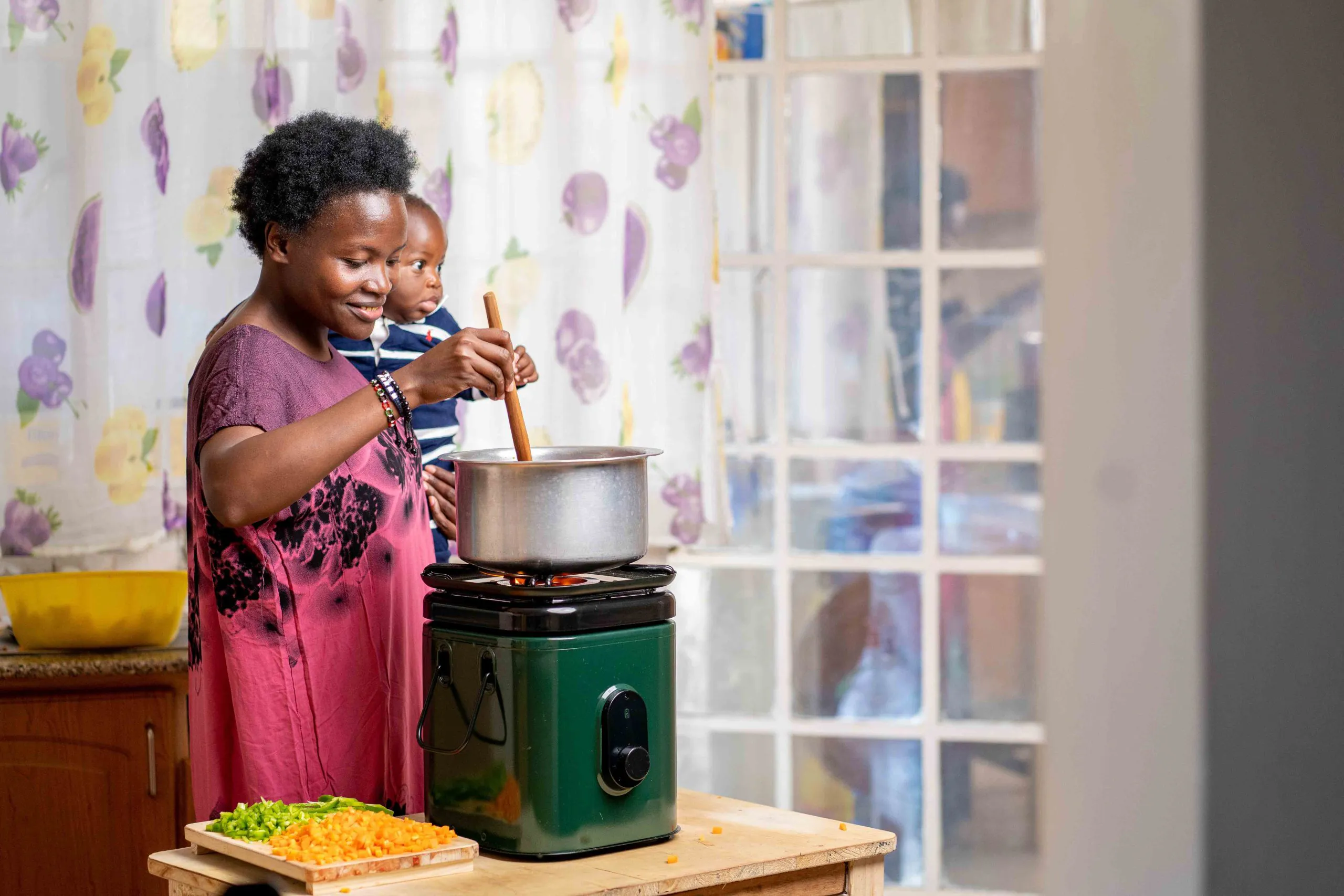
But here is something that might change your view: today, in Kenya, families are trading expensive and dirty charcoal stoves for clean cooking stoves – for free – because of a deal struck at a COP summit. This moves beyond the promises and has delivered something that is working in real kitchens and improving thousands of lives.
The deal we’re referring to is the Paris Agreement, and the part of the agreement that is happening for these families is Article 6.
What is Article 6 of the Paris Agreement?
The Paris Agreement, adopted by 196 countries at the 2015 UN Climate Change Conference, established a global framework for limiting warming to 1.5°C. Article 6 is one of its most important (and complex) elements, enabling countries to cooperate on reducing emissions by trading verified carbon credits, helping nations meet their climate targets more efficiently.
Here’s how that works: Under Article 6.2, countries and private actors can engage in cooperative approaches through the transfer of credits known as Internationally Transferable Mitigation Outcomes (ITMOs). So, if a project in Kenya reduces carbon emissions, those reductions can be measured, verified and sold as credits to companies or governments elsewhere in the world that need to offset their own emissions. The revenue flows back to the project, allowing it to keep running and expanding. And there we have Carbon Credits
Carbon markets have created a pathway to scale by monetising emissions reductions, allowing developers to significantly subsidise the cost of clean cookstoves.
And it’s that subsidy that allows EcoSafi to give a premium cookstove to a family in Nairobi at no upfront cost. The family moves to clean cooking; EcoSafi generates verified carbon credits from the emissions avoided, which are then sold to buyers internationally, generating revenue for more stoves ... and on and on...
In this way, we can see that the Paris Agreement has created a financial architecture to fund real solutions in the real world.
EcoSafi's credits are different
We are being honest here: carbon credits have a credibility problem. Over the past decade, voluntary carbon markets have faced mounting criticism and created accusations of greenwashing, low-quality credits and inflated emissions reduction claims have eroded trust in the process. The cynicism that surrounds COP events extends to carbon markets, too. However, EcoSafi has built its entire model around solving that problem.
EcoSafi, together with Gold Standard, launched Africa's first carbon credits certified under the rigorous Metered and Measured Energy Cooking Devices (MECD) methodology, the most exacting standard available for clean cooking projects. Rather than relying on estimates, EcoSafi's model links the calculation of carbon credits directly to metrics like stove use and actual fuel sales.
This transparency means EcoSafi's credits are worth more than those of other cookstove providers; they have sold for as much as $35 per tonne of CO₂. EcoSafi is also the only 'A'-rated cookstove project according to independent ratings agency BeZero.
Flying in the face of greenwashing, Ecosafi has made integrity the foundation of its business model, and been rewarded for it.
How families in Nairobi are benefiting
With charcoal prices at a five-year high, the timing could not be more important. Millions of Kenyan households are spending a growing share of their income on a fuel that is expensive, inefficient, and actively damaging their health. In sub-Saharan Africa, household air pollution claims over 800,000 lives every year, with women and children bearing the greatest burden.
EcoSafi's model addresses this directly. Customers receive a premium cookstove at no upfront cost. They then subscribe to purchase EcoSafi's own fuel pellets (that are sustainably manufactured in Kenya from sugarcane waste) at prices 40–70% cheaper than charcoal or LPG. The stove and the pellets are engineered as a single system: the pellets are designed for the stove, and the stove is designed to burn the pellets with extraordinary efficiency.
The result is emissions reductions of more than 90% compared to charcoal. In fact, EcoSafi's stove sits in the same WHO Tier 5 emissions category as LPG and electric cooking.
The benefits for families are multiple and immediate:
- Fuel costs fall by 40–70% from the moment a family switches. For a household already choosing between cooking and eating, that is transformative.
- he stoves cook faster than charcoal, and families no longer lose hours each week sourcing, transporting and managing charcoal supplies. EcoSafi customers save an estimated 61 hours per household per year, time that flows back to women, who bear the disproportionate burden of fuel management.
- Charcoal smoke is a chronic health hazard. Across the world, burning harmful fuels like wood, charcoal and kerosene for cooking leads to 3.2 million premature deaths annually, a figure disproportionately impacting women and children.
- EcoSafi's approach reduces emissions by over 90% compared to traditional fuels like charcoal and wood, which are responsible for substantial deforestation across Africa.
You can be a part of it
The EcoSafi bond offer on Energise Africa is raising £300,000 to manufacture and distribute nearly 5,000 additional cookstoves. This bond is focused on the stove manufacturing side of EcoSafi's operation, the capital-intensive work of producing and deploying the hardware that makes everything else possible.
The projected impact over the lifetime of the stoves funded by this bond: 37,673 tonnes of CO₂ saved, over £310,000 in fuel savings returned to families and hundreds of households freed from charcoal dependency.
The bond offers a targeted return of 8% per annum over a 24-month term, with a minimum investment of £50 and eligibility for an Innovative Finance ISA.
But more than that, your capital goes directly into the machinery that produces stoves, which Kenyan families get without upfront costs, thanks to carbon finance, which the Paris Agreement made possible.
The world may be cynical about what COP delivers, but if you look at what EcoSafi is doing in Nairobi today, you can see Article 6 in action.